Education

Experience

Services
- Conference Reviewer: CVPR, ICCV, ECCV, NeurIPS, ICML, ICLR, AAAI, IJCAI, ACM MM, MICCAI, ISBI, BIBM
- Journal Reviewer: TPAMI, TIP, TMI, TNNLS, TMM, TRPMS, PR, TOIS, JBHI, MEDIA
About Me
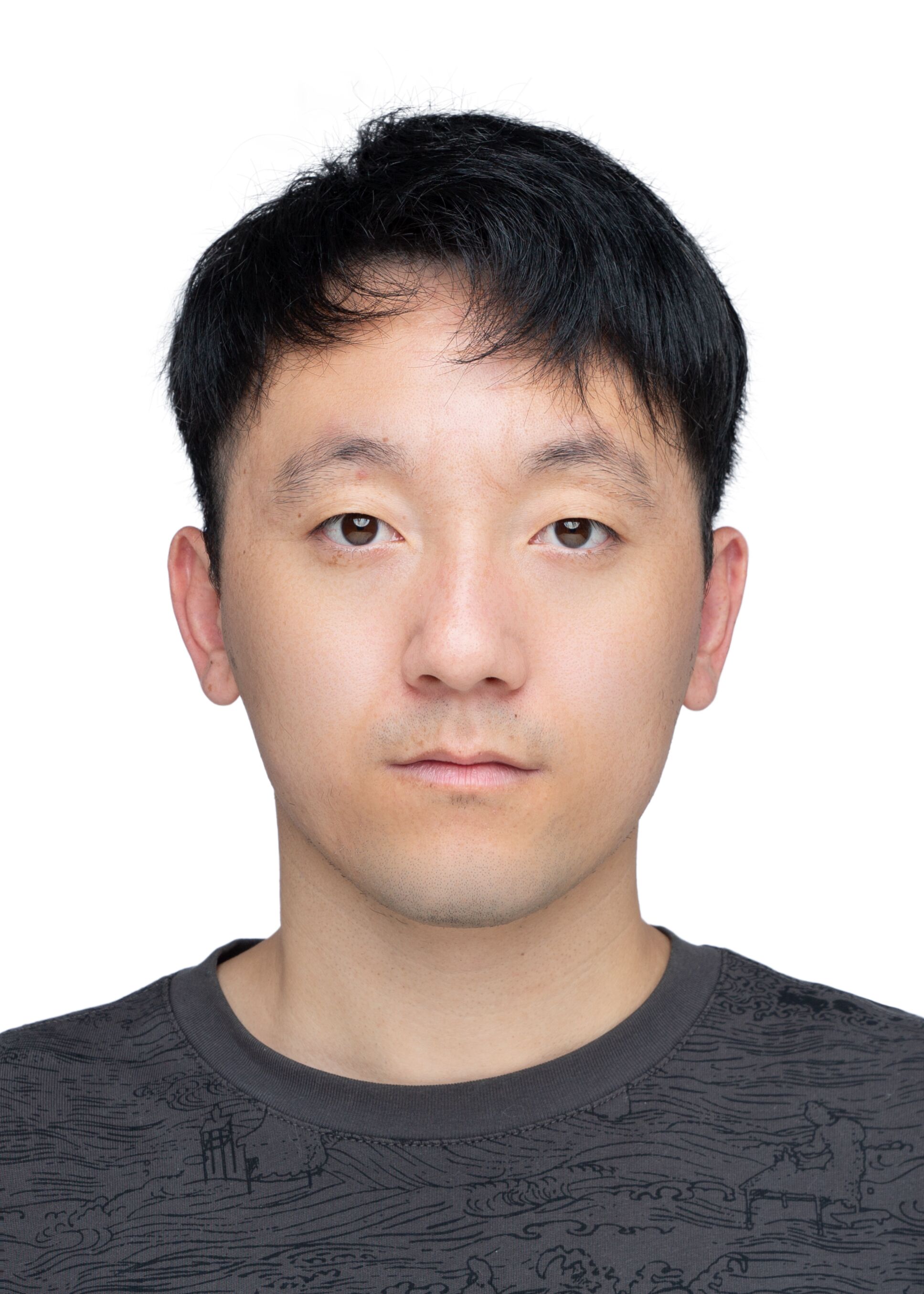
I am a Ph.D. student in Cyber Science and Engineering at Sichuan University. My research focuses on federated learning, image generation, and AI for healthcare.
I am especially interested in representation learning for distributed, privacy-sensitive, and clinically complex settings: how models can learn from heterogeneous clients, preserve useful local knowledge, and still build robust global representations. My recent work spans federated visual learning, reliable multi-label medical image diagnosis, and LLM-orchestrated CT reconstruction, while my earlier work studied deep learning methods for MRI reconstruction, CT reconstruction and denoising, CT metal artifact reduction, and OCT speckle reduction.
Before starting my doctoral study, I worked as a Software Engineer at Huawei Cloud Computing Technology Co., Ltd., where I gained practical experience in cloud computing, large-scale distributed systems, and data analysis.
For collaboration, feel free to reach me at yqhuang2912@gmail.com.
Warning
Problem: The current name of your GitHub Pages repository ("Solution: Please consider renaming the repository to "
http://".
However, if the current repository name is intended, you can ignore this message by removing "{% include widgets/debug_repo_name.html %}" in index.html.
Action required
Problem: The current root path of this site is "baseurl ("_config.yml.
Solution: Please set the
baseurl in _config.yml to "News
Publication Highlights
*equal contribution, †corresponding author-
IJCAI'26LLM-Orchestrated Diagnose-Plan-Treat for Mixed-Degradation CT Reconstruction
Accepted to IJCAI 2026. The work explores an LLM-orchestrated diagnose-plan-treat framework for mixed-degradation CT reconstruction.
-
ICML'26FACT: Fuzzy Alignment with Comorbidity Topology for Reliable Multi-Label Medical Image Diagnosis
Accepted as an ICML 2026 regular paper. The work studies reliable multi-label medical image diagnosis through fuzzy alignment with comorbidity topology.
-
WWW'26Beyond Class Boundaries: Federated Visual Primitive Sharing with Text-Guided Adaptation
Studies federated visual primitive sharing with text-guided adaptation, aiming to improve visual learning beyond fixed class boundaries in distributed settings.
-
WWW'25
Rethinks how information is represented and exchanged in federated learning, aiming to improve collaborative training under distributed data settings.
-
TMI'20
Proposes a noise-powered disentangled representation method for unsupervised speckle reduction in optical coherence tomography images.
-
OE'19
Uses a generative adversarial network to perform simultaneous denoising and super-resolution for optical coherence tomography images.